




The UK’s ambitions in space are reaching new altitudes. The Science and Technology Facilities Council (STFC), part of UK Research & Innovation, has laid out a bold strategic plan that places sovereign capability, industrial participation, and regional growth at the heart of its mission.
From its national laboratories at Harwell and Sci-Tech Daresbury to the rapidly emerging North West Space Cluster, the call is clear: the UK needs more domestic manufacturers ready to help build the next generation of satellites, instruments, and enabling technologies.
For the VORS collaboration – comprising PP Control & Automation, Kasdon Electronics, and ByteSnap Design – that call resonates deeply. Each partner represents a specialist in advanced manufacturing, electronics design, and control systems. Together, they offer a combined capability that aligns precisely with STFC’s vision for a connected, resilient, and innovation-driven UK supply chain supporting the National Space Strategy.
A mission to industrialise the cosmos
STFC’s Strategic Delivery Plan defines an organisation both scientific and industrial in outlook. It is not only funding frontier research in particle physics, astronomy, and space science; it is also building the physical and technical infrastructure that underpins the UK’s participation in global missions.
Major investments include:
The National Satellite Test Facility (NSTF) at Harwell – a sovereign capability that allows large spacecraft and payloads to be tested on UK soil.
Expansion of the Harwell Space Cluster, already home to over 100 organisations including RAL Space, the European Space Agency’s UK HQ, and the Satellite Applications Catapult.
The creation of a North West Space Cluster centred around Sci-Tech Daresbury, linking to the manufacturing strengths of the Midlands and North West.
Partnerships with the UK Space Agency, Ministry of Defence, Innovate UK, and international collaborators to deliver the National Space Strategy in practice.
The message from STFC is unambiguous: the UK must grow an industrial base capable of supporting research-to-production pipelines in space, defence, and quantum technologies. This is not purely a scientific ambition; it’s an industrial one.
Why space needs manufacturing
Behind every satellite, instrument, and launch platform lies a complex web of electronics, control systems, enclosures, sensors, and data interfaces. The ability to design, assemble, and validate these systems domestically is what transforms a research idea into a mission-ready product.
STFC’s plan directly acknowledges this dependency, calling for stronger links between its national laboratories, research campuses, and small-to-medium-sized manufacturers. The intent is to localise supply, shorten innovation cycles, and ensure that economic value from the UK’s growing £17 billion space sector is retained at home.
This is precisely where VORS fits in.
VORS: collaboration for the high frontier
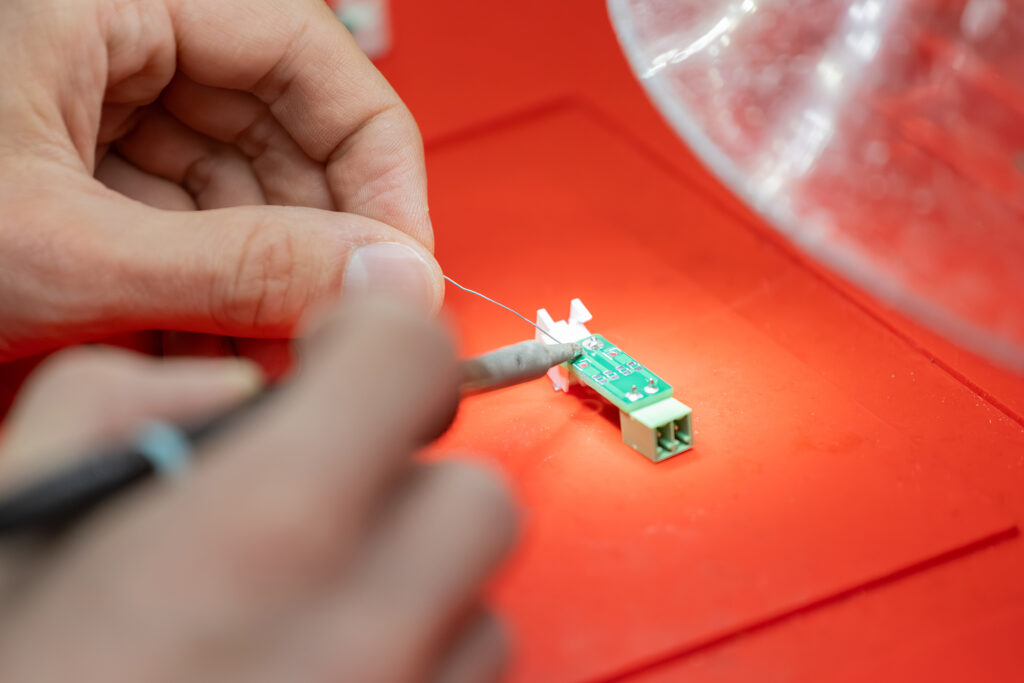
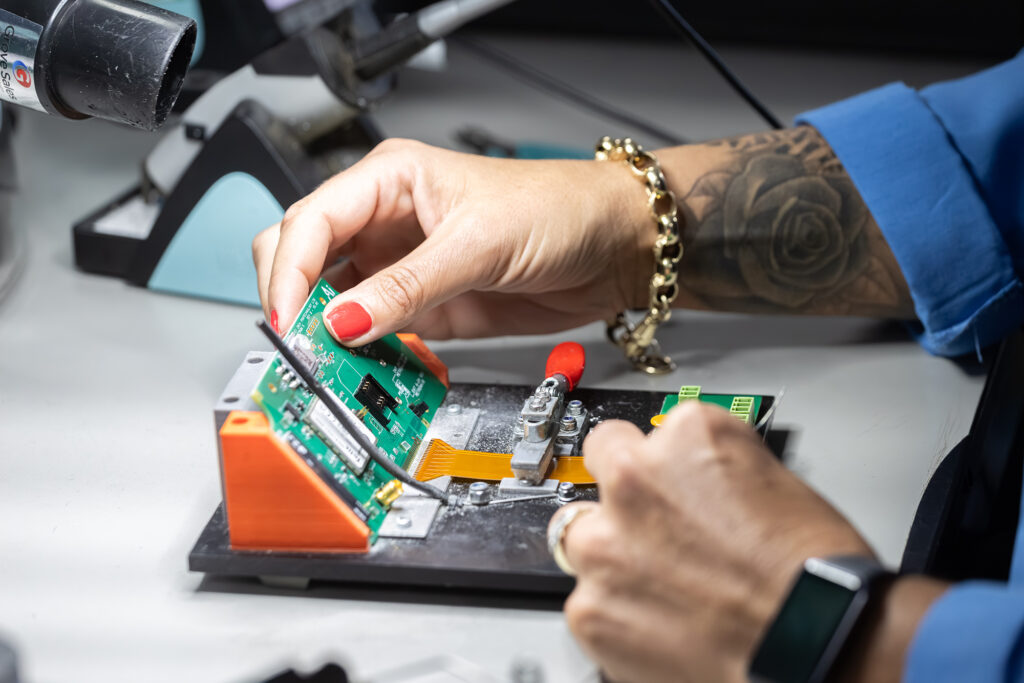

The VORS alliance brings together three manufacturing specialists whose combined expertise offers an end-to-end, UK-based pathway from concept to commercialisation:
PP Control & Automation

A strategic outsourcing partner to world-class machine builders and technology OEMs, PP C&A provides complex electrical and control system assemblies, precision wiring, and full-system build. Its experience in safety-critical sectors such as security, energy, and medical technology translates directly to the reliability and traceability standards required for space hardware.
Kasdon Electronics

Kasdon is a leading provider of PCB assembly, surface-mount, and through-hole production. Its high-mix, low-to-medium-volume capability, combined with advanced inspection, conformal coating, and test processes, makes it ideal for prototypes and flight-qualified electronics alike. The company’s agility supports rapid iteration cycles demanded by R&D-driven programmes.
ByteSnap Design

ByteSnap specialises in embedded systems and electronic product design, including firmware, software, and certification for extreme environments. Its work in ATEX-intrinsically safe electronics, low-power design, and edge computing gives it a unique crossover with space, quantum sensing, and defence applications.
Together, the three companies create a resilient, UK-sovereign manufacturing ecosystem capable of supporting STFC’s and UK Space Agency’s missions – from digital control and embedded intelligence through to scalable production and assembly.
Building alignment with STFC’s “world-class” objectives
STFC’s delivery plan is structured around six “world-class” objectives – people, places, ideas, innovation, impacts, and organisation. VORS naturally aligns with each:
| STFC Objective | VORS Contribution |
|---|---|
| World-class people | Shared commitment to technical apprenticeships, engineering careers, and local talent pipelines that mirror STFC’s own Skills Factory initiative. |
| World-class places | Facilities located close to the Harwell and Sci-Tech Daresbury innovation corridors, offering practical manufacturing interfaces for space clusters. |
| World-class ideas | Translating research and electronic design concepts into manufacturable, testable, and compliant products. |
| World-class innovation | Accelerating technology readiness through collaborative prototyping, digital design, and smart manufacturing. |
| World-class impacts | Supporting national priorities in space, quantum, defence, and Net Zero technologies. |
| World-class organisation | Operating to audited quality, traceability, and sustainability standards demanded by UKRI and high-reliability sectors. |
This alignment demonstrates how industrial collaboration is not peripheral to STFC’s mission, but central to turning science into value.
The regional advantage
STFC’s emphasis on regional clusters is also a pivotal opportunity for UK manufacturers. Harwell in Oxfordshire and Sci-Tech Daresbury in the Liverpool City Region together host over 370 organisations and 7,900 high-tech jobs. Both are expanding rapidly, supported by public-private partnerships that encourage co-location of academia, R&D, and advanced manufacturing.
The formation of the North West Space Cluster adds new momentum. It connects the research capability of Daresbury to the manufacturing and engineering heartlands of the Midlands – precisely where PP C&A, Kasdon, and ByteSnap operate.
By collaborating through VORS, these companies offer a ready-made industrial bridge between laboratory innovation and scalable production capacity, helping STFC achieve its ambition of turning regional clusters into engines of national prosperity.
A call to collaborate
The next decade of the UK space sector will be defined not only by rockets and research, but by how effectively the nation builds and sustains its industrial backbone. STFC’s strategy presents a clear opportunity for manufacturing SMEs with the technical maturity to support space, quantum, and defence projects.
VORS stands as a proven model of how that can be achieved:
- Design to manufacture integration, removing hand-offs and delays.
- Shared engineering standards and data systems, ensuring transparency across the value chain.
- Collaborative scaling, enabling rapid transition from prototype to volume build.
As STFC completes the National Satellite Test Facility, expands Harwell and Daresbury, and drives forward the National Space Strategy, the demand for capable, compliant, and innovative UK manufacturers will only intensify. VORS offers those capabilities today – on home soil, ready to help transform the UK’s scientific leadership into industrial strength.